A difficult conversation doesn't end when it's over: it ends when you know what you'll do differently next time.
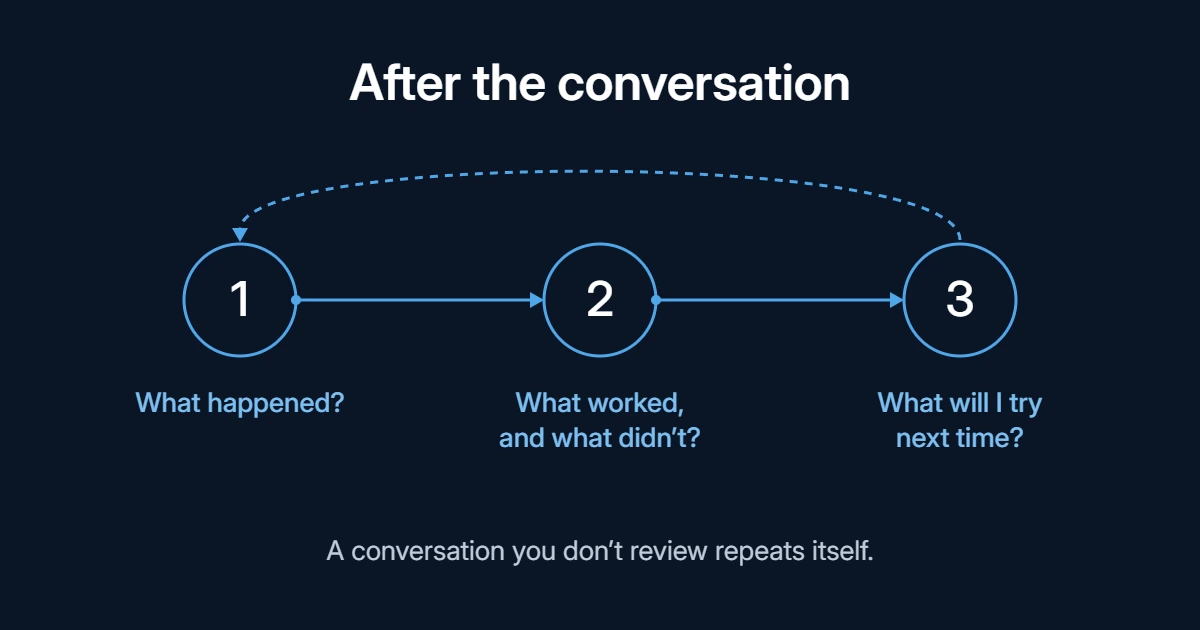
After a difficult conversation, turning it into your next step takes ten minutes and three questions: what happened, what worked and what didn't, and what you'll try next time. In this article I explain why turning the page isn't enough, suggest those three questions and walk you through an example where the second conversation goes differently from the first.
That's it. You've had the conversation you spent days preparing for. Maybe it went well, maybe halfway. And now one of two things happens: either you go over it again and again, thinking about what you should have said, or you put it away in a drawer so you don't have to think about it any more.
I have spent more than thirty years working with management teams, and what separates the people who get better at these conversations from those who repeat the same mistakes isn't how many they have. It's what they do after each one.
"A conversation you don't review repeats itself."
Before going into the questions, look at the Xakrom cycle. It goes from getting to know yourself and preparing a conversation to having it for real, and then starts again: Know yourself, Understand them, Practise, Apply, Improve and Evolve. This article focuses on the last three, the ones that begin once the real conversation is over.
Each screen is a stage. It plays on its own, and you can pause it or go through it at your own pace.
Six stages, and every real conversation is the starting point for the next practice.
In this article
- Why turning the page isn't enough
- Three questions for after the conversation
- An example: after talking to Kenji
- From reflection to habit
- Conclusion
- References
Why turning the page isn't enough
After a difficult conversation there are two easy ways out. The first is to dwell on it: replay it in your head, hunt for the line you didn't say, feel worse every time. The second is to forget it: it's over, better not to think about it. Both have something in common: neither teaches you anything.
David Kolb explained this decades ago: we learn from experience when we live it, look at it, draw a conclusion and put it to the test (Kolb, 1984). If we skip the steps in the middle, experience piles up, but it doesn't turn into learning.
That's why experience on its own doesn't teach: experience you review does. And reviewing isn't judging yourself. It's looking at what happened with the same curiosity you'd bring to someone else's conversation.
Three questions for after the conversation
Once some time has passed, but on the same day, spend ten minutes answering these three questions in writing.
1 · What happened?
The facts, before the feelings: what you said, what they replied, how it ended, what was agreed. Written down like this, the conversation stops being a memory that grows in your head and becomes something you can look at.
2 · What worked, and what didn't?
Both, and specifically. Not "I was awful", but the exact moment the conversation changed, for better or worse. What worked counts too: it's what you'll want to repeat.
3 · What will I try next time?
Just one thing, small and specific. Not "listen more", but "ask a question and wait for the answer, however long it takes". Something you'd recognise if you did it.
| Question | What you take away |
|---|---|
| What happened? | The facts, written down, so you can look at them |
| What worked, and what didn't? | The specific moments that changed the conversation |
| What will I try next time? | Just one thing, small and recognisable |
"You don't need to change everything. Trying one thing differently is enough."
An example: after talking to Kenji

Kenji
Kenji is one of Xakrom's six characters. Analytical and reserved. He knows more than he says, and only shares it when he feels the conversation is worth it.
In this example, Kenji is in your team and is running a migration that's behind schedule. You talked to him on Monday. You asked him what was going on, he answered in short sentences, you ended up proposing the solution yourself and he said "OK". That afternoon, you answered the three questions:
- What happened: I asked him about the delay, he answered in short sentences and I ended up proposing the solution myself. He said "OK".
- What worked, and what didn't: talking about it early and in private worked. Filling his silences didn't: every time he went quiet, I talked.
- What I'll try next time: ask an open question and wait for his answer, however long it takes.
On Wednesday you talked to him again:
You: Kenji, on Monday I asked you about the migration and I don't think I let you answer. What's holding it up?
Kenji: (after a silence) The supplier changed their system two weeks ago. I flagged it in the project channel, but nobody read it.
You: I didn't know that. What do you need to unblock it?
Kenji: Two days with the integration team. And someone to ask their manager.
You: I'll do that today.
The question was almost the same. What changed was what you did after asking it: you waited. And in that silence, what hadn't come out on Monday appeared.
That's the cycle in miniature: Apply was Monday's conversation, Improve was those ten minutes in the afternoon, and on Wednesday you went back to Apply with something new to try.
If Wednesday's conversation had been a feedback conversation, the SCORE method organises it into five two-way steps, and I explain it in What is the SCORE method?.
From reflection to habit
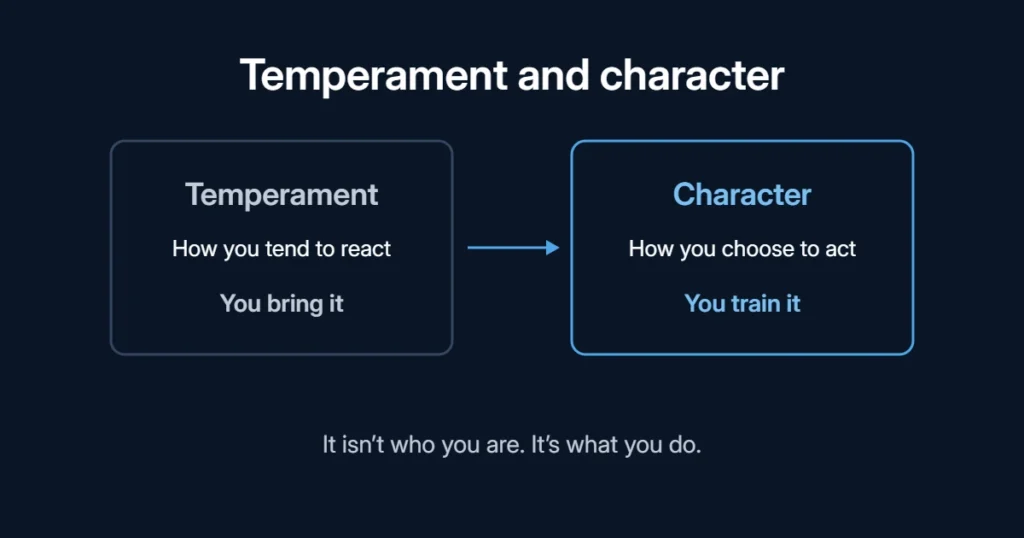
Something that works once isn't yours yet. To make it yours, you need to repeat it. That's why the last stage of the cycle, Evolve, moves in three steps: Question the assumptions behind the way you usually respond, Experiment with other ways of acting and Consolidate what works, repeating it until it comes naturally.
In the Cooplexity model, trust in a team isn't something you have or lose all at once: it develops step by step, in every interaction (Zamora, 2020). The same goes for your communication skills. Every conversation you review is a step.
And the next step is always the same: the next conversation.
"Experience doesn't teach on its own. Experience you review does."
Conclusion
A conversation you don't review repeats itself.
Don't dwell on it and don't forget it: look at it with curiosity, on the same day.
Three questions, ten minutes.
What happened, what worked and what didn't, and what you'll try next time.
Just one thing, and repeat it.
A small change you repeat is worth more than a big resolution you forget.
What was your last difficult conversation? The next one goes better when you've reviewed the last, and better still when you've practised it first. That is why I created Xakrom.
Practise this conversation in Xakrom.
Xakrom is in beta. Be one of the first to try it.
References
Kolb, D. A. (1984). Experiential Learning: Experience as the Source of Learning and Development. Prentice-Hall.
Zamora, R. (2020). Cooperación en complejidad: Cooplexity, un modelo de colaboración en complejidad en tiempos de incertidumbre y cambio [Cooperation in complexity: Cooplexity, a model of collaboration in complexity in times of uncertainty and change]. Ricardo Zamora. ResearchGate